
Cremation
Today, in Australia’s more populated areas, cremation has become the most popular choice. This is usually because it is either the deceased’s preference, or it may be chosen as a lower-cost option, where cemetery fees are more expensive.
Cremation is a respectful dignified process that is preferred by many of today’s families. Redlands Crematorium and Memorial Gardens’ modern cremation facilities are among the best in Australia remaining energy efficient and meeting all guidelines for environmental safety. Our dedicated staff are experts in the funeral care industry and remain totally focused on family service.
Should you wish to know more details about the cremation process, our staff are always available to answer your questions or arrange a tour of the facility.
The Process
Understanding the cremation process
Following the funeral service, the coffin is moved to the crematorium on-site. Once accepted by crematorium staff, the coffin remains sealed throughout the cremation process.
Verification of the deceased
Our staff verify the identity of the deceased via the name-plate on the coffin, ensuring the details match the ‘Application for Cremation’ (the document required by Justice Department Regulations before a cremation can take place) and the two Medical Certificates or Coroner’s Cremation Permit received from the funeral director. In addition to confirmation of death the medical certificate indicates if battery powered devices (such as a pace-maker) have been removed.
Flowers
Flowers remaining with the coffin are cremated with the coffin. Families should ask their funeral director during the arrangement process if they wish to retain flowers following the funeral service.
When will the cremation occur?
The cremation will generally be carried out on the same day as the funeral service but in accordance with Health Department Regulations, can occur up to 48 hours later. If the cremation is not to occur immediately, the coffin is held in a temperature-controlled holding room.
Preparation for cremation
When cremation is due to occur:
The coffin is transferred onto an insertion trolley
The name plate is removed, and placed alongside the cremator, for identification throughout the process
The coffin is inserted into the cremator.
In all cases, the coffin and deceased are cremated together. Cremation begins immediately once the coffin is inserted into the cremator.
The cremation process
Cremators generally comprise of a main cremating chamber, a secondary air chamber and a holding chamber.
In accordance with Health Department Regulations, coffins must be cremated individually, in other words, only one coffin is ever placed inside the main cremation chamber at any one time. Likewise there may only be one body per coffin except in special circumstances, which require permission from the Director General of Health.
At the completion of the main phase of the cremation process the cremated remains are moved into the holding chamber to finalise the cremation. Once finalised, the cremated remains are placed into a cooling container. When cooled, metallic contents (prostheses, coffin nails etc) are separated from the remains and disposed of in an appropriate manner.
Cremated remains or ashes
Cremated remains are commonly referred to as ‘ashes’. However, technically there are no ashes, what are left are fragile calcified bone fragments.
Ash container
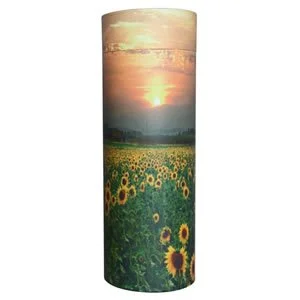
The cremated remains are transferred to a processor to reduce the bone fragments to a fine granule-type consistency which in-turn is placed in a sealed container. The name-plate and an identifying label are then attached.
The container accommodates all of the cremated remains. In the unusual event that an ash container is insufficient to hold all of the ashes, an extra container is used.
Ash containers are held until instructions are received from the family or applicant. The ashes are then, subject to Health Department Regulations, dealt with according to the instruction given.
Interesting Facts
Over 130,000 people die in Australia each year.
56% of people currently opt for cremation with the number slowly increasing. In urban areas where crematoria are more readily available, the rate approaches 70%.
Cremation is usually not acceptable within Orthodox Judaism, Islam, and Eastern Orthodoxy. However, most Christian denominations approve cremation, and it is the preferred method among Hindus and many Buddhists.
The Roman Catholic Church no longer considers there to be a danger that Christian cremation will be associated with non-Christian belief, or with a denial of such doctrines as the resurrection of the body, immortality of the soul, and the existence of eternal life. The Catholic Church recommends that cremated remains be disposed of in a way that indicates respect for the body of the deceased person. A memorial in a public place is favoured so that even in death the deceased person’s commitment to Christianity is still proclaimed.
Once the crematorium has accepted the coffin it may not be opened.
One person is only ever cremated at a time. The only exception is in the case of a mother and baby or twin children. It may also be acceptable for both a mother and baby or twin children to be in the same coffin. These instances only occur at the request of the family.
A cremator is made from refractory (heat-resistant) bricks and fuelled by natural gas.
The coffin is inserted into the cremator head first.
All coffin handles are cremated unless they hinder the cremation process.
The time taken to cremate will depend on many factors including body mass, bone density, and the materials from which the coffin is manufactured. The average time for an adult cremation is 90 minutes at a temperature of between 800 and 1000 degrees Celsius.
On average from insertion to final cooling the cremation process can be between 1 and 4 hours.
If you have any questions at all, please do not hesitate to contact us and speak with one of our caring staff.